
Access, Regulation, and the Future of Drone Use
Analysis raises questions about how policy decisions may shape who benefits from drone technology
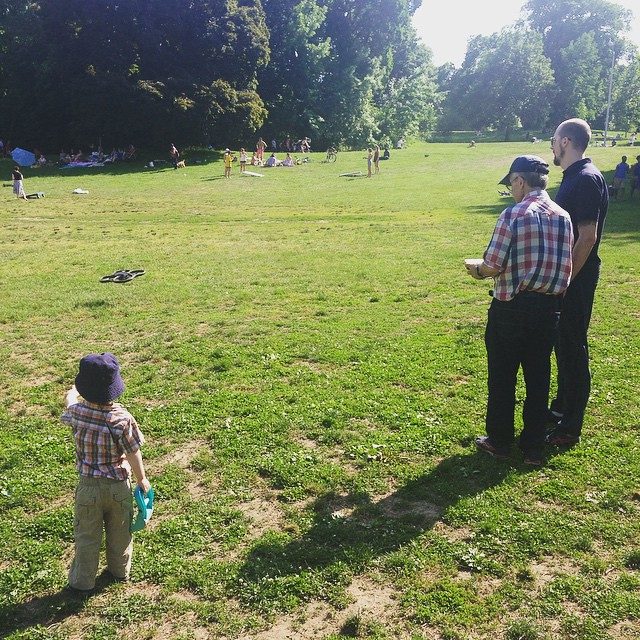
As drone technology advances, its applications continue to expand across industries, public safety, and everyday life. Drones support infrastructure inspection, emergency response, mapping, and delivery services. These capabilities position the technology as a valuable tool for efficiency and innovation.
At the same time, their growing presence has prompted discussion about how drones should be governed. Organizations such as the American Civil Liberties Union (ACLU) are raising questions about how evolving regulations may shape access to the technology.
In a new white paper, “Drones For Them But Not For Us?”, ACLU Senior Policy Analyst Jay Stanley examines current policy trends. He argues that regulatory frameworks may increasingly favor government and commercial users over individuals. The paper aims to contribute to ongoing policy discussions as lawmakers, regulators, and industry stakeholders define the future of drone operations.
Stanley frames the issue in terms of access and power:
At the ACLU we always ask the question, ‘who will this technology empower? Will it shift power?’ So it was natural to ask that question about drones. In recent years including during two FAA ARCs that I was a member of, I’ve really felt that the answer is starting to look like, ‘not ordinary people,’ so I wanted to put down on paper why it looks that way to me. I’m hoping to start a conversation about this and getting policymakers of all kinds thinking about this.
Expanding Use Cases—and Expanding Questions
Drones are already used in a wide range of applications. Public safety agencies deploy them for search and rescue and situational awareness. Commercial operators are advancing delivery and inspection programs. Individual users continue to use drones for photography, research, and recreation.
The ACLU paper highlights the importance of maintaining space for all of these uses. It notes that drones have enabled individuals to document environmental issues, support journalism, and contribute to community projects.
The concern, according to the paper, is not about the technology itself. It focuses on how access to drones may evolve under current policy trends.
Five Areas of Concern
The white paper outlines five areas of concern. These issues are also the subject of active debate within the broader drone industry. Recreational users and small commercial operators helped establish today’s ecosystem, often driving early adoption and innovation. As the sector matures, however, these users face rising costs and more complex regulatory requirements, which may affect their ability to participate.
While industry stakeholders may not agree on every concern, there is broader alignment on the need for clear and consistent rules. Greater regulatory clarity can help define expectations, support responsible operations, and build trust, allowing both drone operators and the communities around them to feel more confident in how the technology is used.
1. Barriers to Flight
The paper argues that expanding counter-drone authorities could restrict when and where individuals operate drones. It notes that while security concerns are real, most unauthorized flights are not linked to harmful intent.
2. Barriers to Ownership
The report points to policy decisions that could affect affordability and availability. It suggests that restrictions on foreign-made drones, combined with market conditions, may increase costs and limit access.
3. Limited Local Control
The paper raises questions about the balance between federal authority and local input. It states that communities may have limited ability to regulate drone activity over their neighborhoods.
4. Increased Surveillance Capabilities
The report highlights the growing use of drones by law enforcement and government agencies. It notes that “a minimum of 1,500 US police departments already have drone programs” and that these programs continue to expand.
5. Limited Transparency
The paper also focuses on transparency. It suggests that members of the public often lack clear information about who is operating drones overhead and what data is being collected.
Regulatory Momentum and Industry Growth
These concerns emerge as drone operations continue to scale. Ongoing rulemaking by the Federal Aviation Administration, including efforts to enable beyond visual line of sight (BVLOS) operations, is expected to support new commercial use cases.
The paper notes that these developments are often shaped by industry and government stakeholders. These groups are actively engaged in regulatory discussions and investment planning.
“Most Americans aren’t thinking about drones right now,” the report states, adding that companies and government agencies are playing a central role in shaping policy .
A Call for Broader Policy Engagement
The ACLU’s analysis calls for greater attention to how drone policies are developed. It recommends safeguards such as clearer limits on enforcement authority, improved transparency, and more opportunities for local input.
The paper does not argue against drone innovation. Instead, it emphasizes the importance of balancing innovation with accountability. As drone adoption increases, questions about access, oversight, and public benefit are likely to remain central.
For policymakers and industry stakeholders, the challenge will be ensuring that drone technology continues to deliver value while addressing concerns about privacy, fairness, and control.
Read more:
- ACLU Discusses Concerns Over Police Drone Surveillance, Drone Delivery: DRONELIFE Exclusive
- ACLU Calls for Strict Limits on Police Drones. Skyfire Consulting Asked Them Why.
- FAA’s Expansive Chicago Drone Ban Raises Questions Over Security and Civil Liberties

Miriam McNabb is the Editor-in-Chief of DRONELIFE and CEO of JobForDrones, a professional drone services marketplace, and a fascinated observer of the emerging drone industry and the regulatory environment for drones. Miriam has penned over 3,000 articles focused on the commercial drone space and is an international speaker and recognized figure in the industry. Miriam has a degree from the University of Chicago and over 20 years of experience in high tech sales and marketing for new technologies.
For drone industry consulting or writing, Email Miriam.
TWITTER:@spaldingbarker
Subscribe to DroneLife here.

I am glad to have the ACLU on board, but the term “may” is doing a lot of heavy lifting here. Most of the five bullet points have already occurred.
For instance, in number 2, Barriers to Ownership, the action of the FCC late last year to add individual drone components to it’s “Covered List,” has *already* caused the cost of UAV’s to soar. The company that I work for has estimated the cost of replacement aircraft has *tripled.* It is hard to imagine many hobbyists springing for that.
Point 3, “Limited Local Control.” Local control of drones has always largely been a fantasy. The FAA controls *all airspace* that is not actively covered by a roof. Local LEOs can ask you to land if you are flying in an unlawful manner, but they are enforcing FAA, not local regulations.
Point 5, “Limited Transparency.” More than a year ago, pilots were required by the FAA to upgrade their fleet to accommodate Remote ID technology, so that there exists a reliable way to identify any UAVs in the vicinity. What more might we do to identify ourselves?
Finally, point 1, Barriers to Flight, discusses “counter-drone authorities” limiting UAV flights. I am already reading reports of pilots alleging that their aircraft was returned home by some external authority using some form of signal to trick the drone. Are these stories true? That is unknown, which is why I saved the first point for last.