
This is a transcript of an internal team meeting held by seed-stage VC firm NextView. Note: This meeting occurred before Part 107 was announced. Nextview often hold “shootarounds” to discuss major tech trends or topics and share lightly edited versions publicly. If you’re interested in early-stage tech startups, listen to their award-winning podcast, Traction, a show about creative and clever ways startups start.

DAVID BEISEL: So, let’s just get up to speed about the momentum around drones. The most prolific type of drone company right now are these consultancy-type businesses that range all the way from two guys who are ex-fighter pilots who love to fly drones and get commissioned to do various things with them up to a large-scale aggregation of drone service providers. So for instance, some entrepreneurs are starting to aggregate individuals and service providers to regionalize your access to drones and make it easier to find and deploy as needed. I think where we are looking as a firm is more in a technology-enabled marketplace like that or a company that builds a product, rather than one that primarily operates with a services model. So all of us have seen both “horizontal” functions — things like mapping, scheduling, and some of the visual processing — and also “vertical” plays, like managing golf courses and other large amounts of real estate, use cases for insurance companies, for news and entertainment, and so on. Another reason we should have this conversation: The FAA is about to make it easier for commercial deployments. It used to be that you’d fall under Section 333, and so commercial drone flights needed to file paperwork each time. Obviously, not only does this not scale efficiently, the rise in drones has caused a backlog that the government can’t really handle — I think I even saw this notice on the FAA website. All indications also point to new rules for commercial drones that could come any day now. So the current one-off, paperwork-based bottleneck will change, and hopefully with that, some better, more modern regulations will follow. So people bullish about drones are pointing to that as a potential seminal event. Given all of that and a lot more that we should discuss, what are everyone’s thoughts on drones?
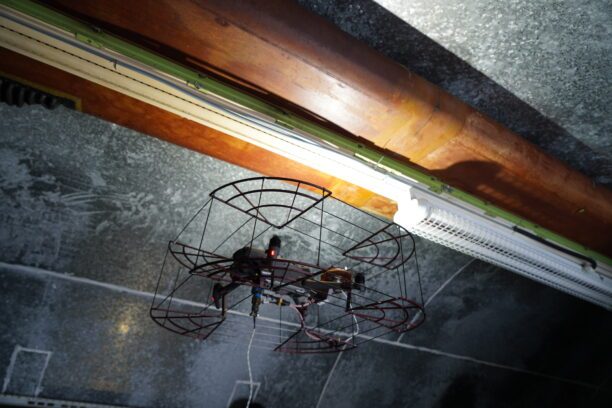
ROB GO: I’ll be honest, I don’t get the amount of hype around drones at all. I’ve been thinking about it like this: If drones are flying robots that have a subsection of use cases available through all robots, then why aren’t people more excited about robots more generally? I get the sense that drones are a hyper-exciting category, but I don’t hear as many people saying robotics is that exceptionally exciting. CyPhy Works in Boston is a good example that DOES refer to robots and robotics for instance.
DAVID: It’s a good point worth unpacking a bit. I’ll add my two cents by starting with what makes drones exciting. One of the big use cases is that they allow you to access places remotely that would be challenging otherwise — and on a low-cost basis. There’s an MIT company, for instance, that’s literally drones-for-underwater. So you can imagine some great efficiencies emerging for things people are already doing, then add to that new capabilities that aren’t currently available.
Other thoughts?
TIM DEVANE: The insurance applications are pretty interesting. You can go where a human can’t for assessing a property, for example. There’s also the potential to have much cheaper delivery of goods which I suppose adds to the hype, since it has potential direct-to-consumer implications.
LEE HOWER: Just to touch on the second part of the question though: Why aren’t more people this excited about robots more broadly? I think part of it has to do with robots being an old concept and drones being a newer concept. Sometimes, it’s just the fact that it’s new that creates the sex appeal. If we called drones just UAVs (Editor’s Note: Unmanned Aerial Vehicles) or maybe flying robots, people might say, “Oh, we’ve had those for 30 years, why so excited now?”
DAVID: It’d be interesting to look at the Google Trends for the word “drones.” About 15 years ago, UAV was definitely something people heard of and explored as investors. Back then, it was all about taking old helicopters and retrofitting them as robots. Today, you can take things that are $500 instead of thousands or millions of dollars, and you can get the same benefit.
LEE: So what’s new is the meme, and that causes some sizzle. Then there’s the scale of manufacturing of things like cameras, gyroscopes, and more. And then there’s the potential for autonomy. Regulations aren’t there yet for autonomy to be ubiquitous, but the technology is already there. So, low cost plus autonomy means you can theoretically have drones doing lots of stuff. But again, I’m saying “theoretically.”
So rather than flying robots, think of drones like super cheap, autonomous airplanes or helicopters. So some of the things you can do with planes and helicopters today, imagine doing those things an order of magnitude cheaper and autonomously. The easy example would be delivery of lightweight goods, but the list goes on.
DAVID: Part of it though is definitely that they’re flying cameras, and you can now put a camera anywhere for cheap. So what does that mean?
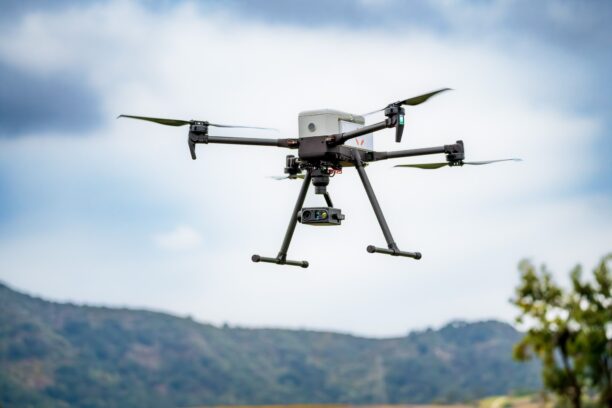
LEE: I think there’s almost no doubt that drones will revolutionize surveying and inspection of physical stuff. Whereas a human being would literally have to go physically inspect something, you can just fly something up or over to it. Even in the era of pre-autonomy, instead of a half-day of someone climbing somewhere to inspect something or sending a vehicle with a human inside it, you can manually fly a drone for 25 minutes instead of a half day. And you can still get all the information you need and perhaps more. So then the question becomes, what other functionality is there? TBD.
JAY ACUNZO: So what’s the conviction around the table in drones and related startups for our work today? One to five with five being the highest, what do we think as an investment team?
TIM: I would say in between 4 and 5, but specifically in a B2B software. So just to explain that a little bit: I’m less convinced the opportunity is in the drone itself, nor am I convinced that end-consumer plays will be big. In terms of the former, I think the hardware, just like VR, will be won by one or two companies. They may already exist, too, but just need to figure out a way to make their prices come down or get the right distribution. In terms of end-consumer plays, I think there’s still a big barrier in moving from a hobbyist market to more widespread adoption, and a lot of that has to do with regulation as much as consumer behavior, which gives me pause.
LEE: I agree that the biggest commercial impact of drones will be in B2B applications. I don’t think consumers will get far beyond hobbyist. You can sort of look to video cameras as a parallel. Twenty years ago, it was pretty uncommon for people to own a video camera, especially if you didn’t have kids. But now that there are significantly more options and better technology and cheaper price points, it’s still pretty hobbyist. GoPro is a bigger company but, again, it’s still mostly hobbyist, and the average GoPro owner buys one product and then never uses it, which cuts down on the ability for the software to create some kind of platform, etc., so similarly, I think drones will be mostly in that category. However, to Tim’s point on hardware, I disagree slightly. Near-term, a non-trivial amount of the economic value will still come from hardware, even though it’s kind of commoditized as you said. History says that in big platform shifts, a disproportionate amount of money gets spent on hardware at first, and then later, more money goes into software and “internetty” kinds of things. Even with a company like GreenSight, for example, you still have to make your drone — even if you’re using commodity parts — to make it a system that works end to end.
DAVID: On investment conviction, I’m a 4, and I agree that the interesting things from a venture standpoint will be B2B. One example that comes to mind is Airwave, but I think beyond a company or two, while we’ve collectively identified a lot of problems, the killer app hasn’t been determined. So how do you invest behind that? Actually, do you know what’s pretty interesting about startup activity in drones? We’ve seen two camps of founder types, and their converge or not will also be interest. So there are the “internetty” founder types who come from the latest wave of software innovation, but then there are the robotics, UAV, aeronautics, etc., people who have been doing this for a long, long time, and they’re seeing that it’s now hot in the startup and venture world and are reaching out to VCs and entering the community we typically associate with “startups” today.
JAY: Are there distinct pros or cons with either type, or are you watching the two combine to have a co-founder from each world maybe?
DAVID: I like the authenticity of having been in the space in the past, but having some of the software startup DNA can really help with things, so ideally you want both.
LEE: Conviction scale, Rob?
ROB: I really don’t know — maybe a 2? I’m struggling to see where to invest here. Obviously, there are companies that are significant or will be. But is there another hardware startup coming that one can invest in? That’s a question I have: Would you try to invest in the next John Deere today?
Or, could it be a drone-enabled service company? I guess I’m most interested in that kind of company, but again, I don’t know what the killer application is there yet.
JAY: So let’s try to end by talking about the consumer. I think we’ve talked a lot about drones from the investor or entrepreneur perspective. But if you picture a drone for an end consumer, sitting in someone’s house, is it by the video games or is it in the garage? Is it something that’s for fun or is it a utility that could be sold to both the enterprise and to consumers depending on functionality, like the John Deere example?
ROB: If you’re thinking about consumers, I think it’s going to be a service that consumers care about that is made possible or better thanks to drones. So in that case, you’re not actually buying the drone. And actually, with that concept of a drone-enabled service, I’m not so negative on B2C companies as a lot of our discussion has been so far. For instance, I’ve been interested in what DJI is doing right now. The end user kind of thing is something like Lily, which you can throw in the air and have it follow and film you.It’s early yet, and they still have to execute on the promises of their pre-launch video. But in the way that GoPro has a strong power user base with hobbyists and then spilled into the mass market, it will be interesting to watch whether companies like Lily follow this path.
What I really could use is a watchdog drone. Have it circle my house and provide 24-hour security.
JAY: Yeah but that’s a nonstarter without laser beams and a voice interface that sounds like Arnold.
Okay, but what about that home utility purpose? Can a big business be built by having different types of drones that do different things around the home?
LEE: Right, could you have a lawn mower that drives itself, then parks in the garage? That’s theoretically the evolution of drones. But really, that would be the consumer getting comfortable with or more likely to adopt autonomous machines than “drones” per se. So I think we’re defining drones as, a flying robot, with or without a camera or autonomy-enabling software installed. It’s a flying robot that captures some kind of information. And eventually if it’s automated, we as a society could become more used to autonomous machines, which opens the door for related technologies or creates new offshoot technologies the way the drive-through window was an offshoot of cars or the rise of podcasting is an off-shoot of in-car technology.
TIM: There are only so many things a drone can do for the modern American household that are additive or more efficient. I think those are pretty few and specific — to your point Jay of sitting in the garage and having one purpose like a snowblower. I think it’s actually powerful to frame drones as extending eyesight, however.
ROB: As I think about it now, focusing on drones could be a big red herring. The point is: smallish machines that are either remotely controlled or self-piloted to complete tasks. It just so happens that it’s a heck of a lot easier to make that machine traverse an area by flying than on wheels or walking. The mega-trend and broader question, then, is are we going to have all these small, autonomous machines around us getting tasks done for people?
LEE: That’s important to think about because flight is sort of the subtext to what makes drones interesting. Flight matters in two ways. First, you’re able to perceive or affect the environment by being able to capture three dimensions rather than two. All the stuff around inspections and surveying is possible because you can fly around the building and change perspectives and so forth. If you had a robot on wheels, you couldn’t do 80 or 90% of that.
And second, flying is a lot easier than other types of movement for autonomous machines because air space, at least right now, is a lot less dense and crowded.
TIM: True, but to the density point — there are limitations on flight time due to the energy density of batteries. You have somewhere between 20 and 30 minutes, for instance. So in addition to autonomy, longer-lived flight times through better battery tech or miniature gas/electric hybrid drive trains would open up a whole new range of applications for drones.
LEE: Definitely. But to bring this discussion home, I think it’s highly likely we are in a hype cycle. Think about clean tech 8 or so years ago — most of it didn’t pan out when compared to the hype, but that doesn’t mean a few meaningful companies weren’t built or continue to get built today.
TIM: You just need to get past some of the superficial components that have made it buzzy. There was the Amazon Super Bowl ad that got people talking about delivery at large-scale in the near future through drones, and there’s a wow factor to the take-off video that everyone’s been able to do now — launching the drone up as the video goes away from you on the ground.
DAVID: Right, that speaks to some kind of platform shift. But we see it as less far-reaching than THIS (holds up iPhone). So for our world at investors and specific to NextView, it’s fair to say that since you’re going to need software that will prop up a lot of this, we see a real opportunity.
(Editor’s note: At this point, something flew into the window of our fourth-floor Boston office. Everyone jumped.)
JAY: A massive dragonfly that just hit the window.
DAVID: Are you sure? It might have been a drone.
Follow these VCs at:
- twitter.com/davidbeisel
- twitter.com/leehower
- twitter.com/robgo
- twitter.com/tdevane
- twitter.com/jayacunzo

Alan is serial entrepreneur, active angel investor, and a drone enthusiast. He co-founded DRONELIFE.com to address the emerging commercial market for drones and drone technology. Prior to DRONELIFE.com, Alan co-founded Where.com, ThinkingScreen Media, and Nurse.com. Recently, Alan has co-founded Crowditz.com, a leader in Equity Crowdfunding Data, Analytics, and Insights. Alan can be reached at alan(at)dronelife.com
Leave a Reply